


Description
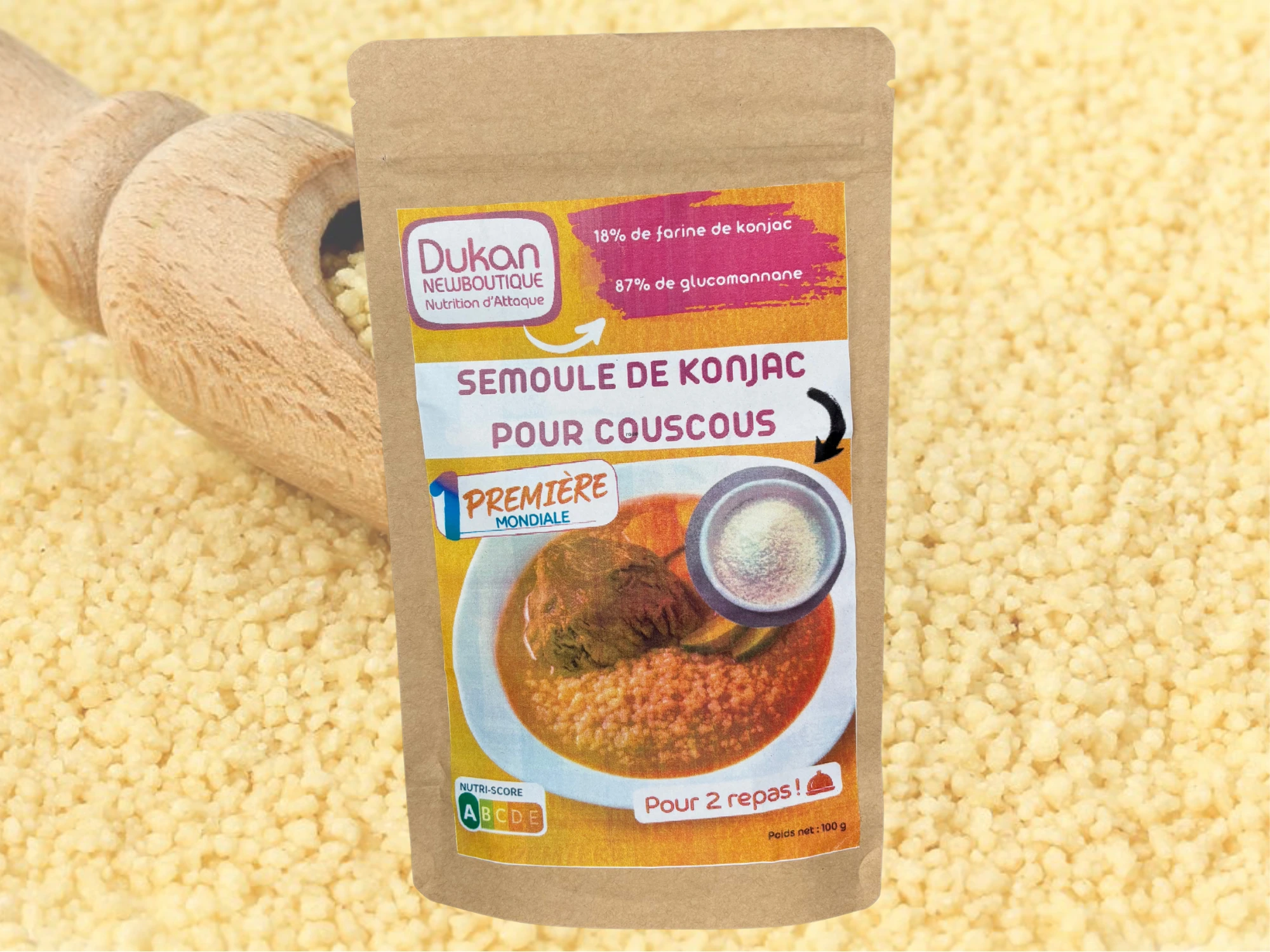
After two years of research and development, we have successfully developed our very first konjac semolina, a light, modern alternative that is perfectly suited to a balanced diet.
Dukan has developed a slimming alternative to starchy foods: konjac semolina that tastes as good as wheat semolina BUT is lower in calories* and carbohydrates**, fat-free, wheat flour-free .
UNIQUE: it is the first dry konjac semolina on the market!
Provides two meals per packet.
√ * LOW-CALORIE: 80% LESS CALORIES THAN STANDARD DURUM WHEAT SEMOLINA
√ **LOW-CARB: 80% LESS CARBS THAN STANDARD DURUM WHEAT SEMOLINA
Our semolina is made with 18% konjac flour (compared to an average of around 3% in competing konjac-based products).
Our konjac semolina contains a fibre content: 2,1%, ideal for promoting satiety.
This semolina also has a very long shelf life: when stored away from moisture, it can be kept for several years.
Its natural, appealing and appetising colour, and above all its delicious taste and light, melt-in-the-mouth texture, make it one of the most innovative and promising products in the Dukan universe.
Our ORIGINAL DUKAN semolina from Indonesia has a guaranteed high glucomannan content.
After cooking, this semolina holds its shape and does not become sticky. The grains separate easily!
EXCLUSIVE FOR DUKANNEWBOUTIQUE
Just as good as classic wheat semolina, but with fewer calories!
With 100g of dry semolina, you can make 300 to 350g of cooked semolina.
Directions for use: Pour 300 ml of water into a saucepan for 1 portion of semolina. Bring to the boil, then add the semolina and cook for about 8 to 10 minutes for an al dente texture, or 12 to 15 minutes for a softer texture, depending on your preference. Once cooked, drain and rinse thoroughly with warm water. Your semolina is now ready to be seasoned and cooked however you like.
The longer you cook your semolina, the larger the grains will become.
√ * LOW-CALORIE: 80% LESS CALORIES THAN STANDARD DURUM WHEAT SEMOLINA
√ FAT-FREE
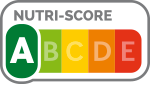
√ NUTRI-SCORE A
√ **LOW-CARB: 80% LESS CARBS THAN STANDARD DURUM WHEAT SEMOLINA
Net weight: 100G
——————————————————
THE MANY SEDUCTIONS OF KONJAC
At the beginning, there was the first-generation konjac — raw and incredibly effective, but it came from China in water-filled packaging, with its translucent color and its natural (but sometimes unpleasant) odor.
I was the first to introduce it to supermarkets.
But I realized that, as it was, it would remain confined to the most determined weight-loss warriors and would never become a true staple food like pasta or rice.
So I decided to transform it.
I filed a manufacturing patent, refining its cooking method, and shaping the rice and pasta to improve their texture, color, and flavor.
This transformation was made in France.
Then, I handed it over to semi-artisanal French producers to create recipes inspired by traditional dishes — making konjac pasta and rice accessible to everyone.
My ambition was clear:
to make konjac-based pasta and rice compete with traditional versions that once saved us from famine —
but today, in times of abundance, have become part of the problem.
Now, it’s the opposite: abundance makes us sick — and among that abundance, pasta and rice are at the top of the list.
So spread the word — try the new generation of konjac!
“Glucomannan consumed as part of a low-calorie diet contributes to weight loss. The beneficial effect is achieved by consuming 3 g of glucomannan daily in three doses of 1 g each (equivalent to 1.5 packets per day of dry konjac flour) taken with 1 to 2 glasses of water, before meals and as part of a low-calorie diet.”